8th Ramadan Sports Tournament concluded with an awards ceremony
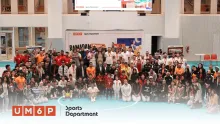
<p>On the 26<sup>th</sup> of March, the 8th edition of the Ramadan Sports Tournament concluded with an awards ceremony at the indoor multisport hall, marking the end of a month of competition and team spirit.</p>
<p>The tournament featured over 60 football teams and 24 basketball teams, resulting in 132 football matches and 149 basketball games. Individual competitions also saw strong participation, with 60 players competing in chess and 77 in table tennis</p>
Green Energy Park expanded collaboration with China on Renewable Energy and AI
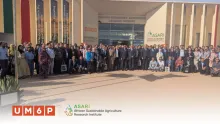
<p>The Green Energy Park (GEP) participated in a study visit to focused on collaboration in renewable energy and artificial intelligence.</p>
UM6P renewed education partnership with the Ministry of Education and OCP Foundation
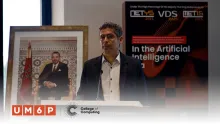
<p>On the 11<sup>th</sup> of March, the Ministry of National Education, Preschool and Sports, University Mohammed VI Polytechnic, and OCP Foundation renewed their partnership agreement during a ceremony held at the ministry’s headquarters in Rabat.</p>
Meet & F’tour with Valyans Consulting explored business transformation
<p>On the 24<sup>th</sup> of March, the African Consulting Club (ACC) in collaboration with Student Organizations, Leadership & Engagement (SOLE), Africa Business School, and Valyans Consulting organized the Meet & F’tour event, titled “From Consulting to Impact: Successfully Transforming Moroccan Business” at the UM6P Campus in Rabat.</p>
Communicating Science #04: From Air to Impact — Soukaina Lamnini’s Innovative Breakthrough in Sustainable CO₂ Capture Technology

<p>As the world is undergoing climate change, researchers are looking for ways to extract carbon dioxide (CO2) from the atmosphere. One promising approach is Direct Air Capture (DAC), which captures CO2 directly from the air. Researchers have now developed a cost-effective and simple method using cellulose from plants to produce CO2-absorbing paper.</p>
"Blast From the Past and Future" Workshop explored time travel themes
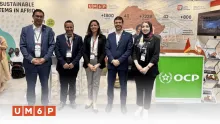
<p>On the 17<sup>th</sup> of March, the Time Traveling Student Club hosted the "Blast From the Past and Future" workshop in collaboration with Student Organizations, Leadership & Engagement (SOLE) at UM6P Campus in Benguerir.</p>
Biochar-based solutions discussed during CAES X-CHANGE seminar
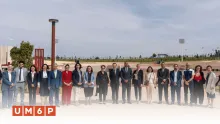
<p>On the 25<sup>th</sup> of March, the College of Agriculture and Environmental Sciences (CAES) held a seminar titled “Circular Bionutrient Economy: Biochar-Based Fertilizer for Nutrient Recycling” at UM6P Campus in Benguerir, as part of the CAES X-CHANGE series.</p>
Career launchpad bootcamp equipped students with essential job search skills
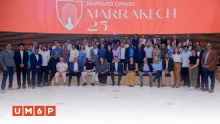
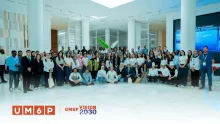
<p>The UM6P College of Computing, in collaboration with the Career Center, held the Career Launchpad Bootcamp within the University’s Campus in Benguerir.</p>
The Globe Digest #59: Technology developed by MIT engineers makes pesticides stick to plant leaves

<p>Reducing the <a name="x__Int_LG29eZd3">amount</a> of agricultural sprays used by farmers — including fertilizers, pesticides and herbicides — could cut down the amount of polluting runoff that ends up in the environment while at the same time reducing farmers’ costs and perhaps even enhancing their productivity. A classic win-win-win.</p>
UM6P Local Debate Competition showcased multilingual debating skills
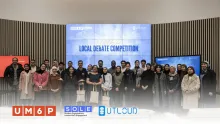
<p>On the 25<sup>th</sup> of March, the Outloud Student Club in collaboration with Student Organizations, Leadership & Engagement (SOLE) organized the UM6P Local Debate Competition within the University’s Campus in Benguerir.</p>